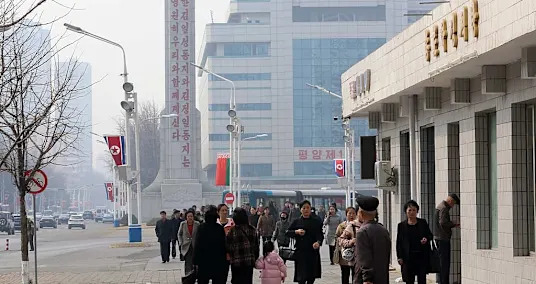
China has announced that its flag carrier, Air China, will resume direct flights to North Korea after a six-year pause, following the restoration of passenger train services between Beijing and Pyongyang.
This marks a significant step toward reopening North Korea, one of the world's most isolated nations, to the world.
Transport links between the two capitals had been suspended since the start of the Covid-19 pandemic in 2020, when Pyongyang implemented a very strict border closure.
While North Korean carrier Air Koryo already resumed flights to Beijing in 2023 and allowed Russian tour groups to visit in 2024, the return of China's air and railways are seen as a major economic milestone, as China has for decades been the main trading partner and a key source of diplomatic and economic backing for the country of 26 million people.
Before the pandemic, there were an estimated 300,000 foreign visitors in 2019, according to South Korea's Institute for International Economic Policy, and Chinese visitors accounted for 90% of all tourists to North Korea. Therefore, the long delay in resuming regular travel had surprised many regional observers.
"The reopening of these borders has been driven primarily by Pyongyang's timeline, which challenges the outdated assumption that Beijing dictates terms to a dependent client state," Seong-Hyon Lee, a visiting scholar at the Harvard University Asia Centre, explains.
Related
Nuclear ambitions complicated the relationship
Despite being Pyongyang’s primary ally, Beijing has frequently voiced disapproval over the North's persistent missile tests and nuclear ambitions. This aspect created a bumpy relationship with Pyongyang, with analysts saying that a nuclear-armed North Korea has often been something of a liability.
The diplomatic normalisation was highlighted last September, when Kim Jong Un attended a massive military parade in Beijing alongside Russian President Vladimir Putin. This was Kim's first appearance at a Chinese military display.
Lim Eul-chul, a North Korea expert at South Korea's Kyungnam University, argues that the war in Iran, in particular, increased "the need for closer coordination between the two nations".
latest_posts
- 1
 These 2 companies are teaming up to offer insurance for space debris strikes on satellites
 - 2Glen Powell will host 'Saturday Night Live' with Olivia Dean as musical guest: What to know ahead of their debut
- 3Firefighters rescue two Israelis trapped in vehicles on flooded roads in West Bank
- 4Agios Pharma shares jump as US FDA expands approval for its blood disorder drug
- 5Discovering a true sense of harmony: Contemplation and Care Practices


- Huge rotating structure of galaxies and dark matter is detected
- Gen Z workplace stereotypes were TV’s favorite punchline in 2025
- Why this Iranian island looks like Mars after it rains
- The Fate of Mechanical technology: 5 Headways Forming Tomorrow
- Nearly 16,000 New York City nurses prepare to strike as contract talks stall
- Holiday weather forecast: Where travelers can expect a wintry mix, flooding and record warmth across the U.S.
- 'All's Fair,' Ryan Murphy's new show starring Kim Kardashian, hit with scathing reviews: 'A girlboss fever dream'
- Track down the Ideal Weight reduction Methodology for Your Way of life
- Plane Passenger Allegedly Includes ‘Bomb Threat’ in Hotspot Network Name, Forces Flight to Make Emergency Landing


